


Should you sell your Twin Cities rental?
If you own a rental here and live somewhere else, you’ve probably asked this more than once. Usually right after a 2 a.m. call about a furnace. The answer is in the numbers, and a lot of owners who live out of state skip some of them. Here’s how to run all of them. If you decide to sell your rental property, we buy with tenants in place.
Step 1: Your real cash flow
| Line | Monthly example |
|---|---|
| Rent collected (not asking rent) | $1,850 |
| Property management (around 10%) | -$185 |
| Property taxes | -$290 |
| Insurance | -$120 |
| Routine maintenance | -$150 |
| Set aside for vacancy and turnover | -$110 |
| Mortgage payment | -$780 |
| Cash flow | $215 |
$215 a month is $2,580 a year. And that’s before any big repair.
Step 2: Big repairs coming due
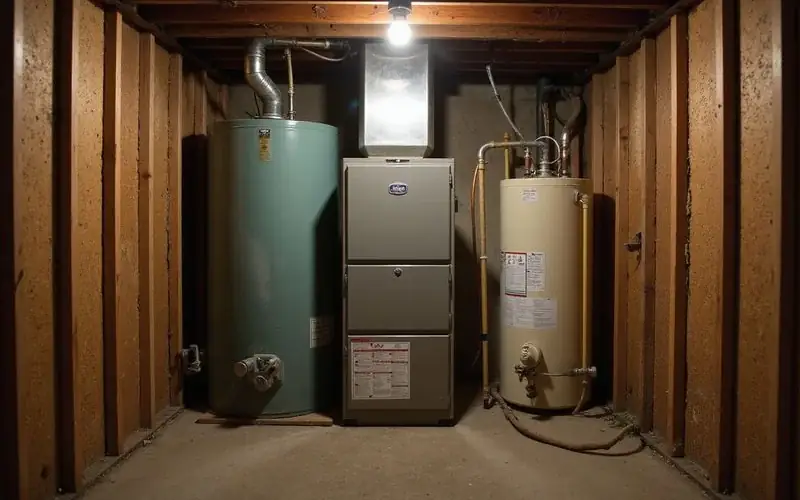
Roofs, furnaces, water heaters, windows and sewer lines don’t show up in monthly cash flow until they fail. A $14,000 roof in the next two years wipes out more than five years of that $215 a month. List what’s coming.
Step 3: Return on your equity
Say the house is worth $300,000 and you owe $120,000. You have $180,000 of equity earning $2,580 a year, about 1.4%, plus appreciation and loan paydown. Compare that with what the same money could do elsewhere, with no tenants.
Step 4: Taxes on a sale
- Capital gains on appreciation.
- Depreciation recapture, which is tax on the depreciation you took, or could have taken, while you rented it out.
- Minnesota income tax on the gain, wherever you live now.
- A 1031 exchange can put off the tax. You have 45 days to name a replacement investment property in writing and 180 days to close on it.
Have your CPA estimate what you’d keep after taxes before you decide.
Step 5: The middle option
Want income without being a landlord? Seller financing or a contract for deed lets you sell the house and get paid monthly, with interest. You carry the risk that the buyer stops paying. But there are no tenants, no repairs and no midnight calls. See seller financing vs. cash.
A quick decision guide
| If this is true | Consider |
|---|---|
| Strong cash flow, no big repairs due, you like it | Keep |
| Thin cash flow, big repairs coming, managing is wearing on you | Sell |
| Want income, not tenants | Seller financing or contract for deed |
| Want to stay invested, but not in a house you manage | A 1031 exchange into something easier to own |
| Problem tenant or repairs you’ve put off | Sell as is with tenants in place |
The questions that settle it for most owners
Numbers matter, but so does your life. Ask yourself these honestly:
- How many hours a month does this rental actually take? Include the calls, the texts, the contractor chasing and the worry.
- What happens if the furnace dies in January and you’re 1,500 miles away? Do you have someone you trust to handle it?
- Would you buy this property today, at today’s price, as an investment? If not, that tells you something.
- What’s your plan for the next five years? If you’ll sell at some point anyway, the only real question is when.
- Is the property manager working for you? Rising costs and slow responses are common reasons owners decide to sell.
Keeping it? Then tighten the management agreement, set money aside for big repairs and schedule them. If you want out, compare three paths. Sell vacant after a lease ends, sell occupied to an investor, or sell to us as is with tenants in place. Each one nets a different number on a different timeline.
How we help
Ryan will lay out three options side by side: a cash sale with tenants in place, a listing, and seller financing. He works from your real rent roll and repair list, and he’ll tell you which one wins and why. You and your CPA can take it from there.
This guide is general information, not legal, tax or financial advice. For your own situation, talk to a Minnesota attorney or tax professional.