

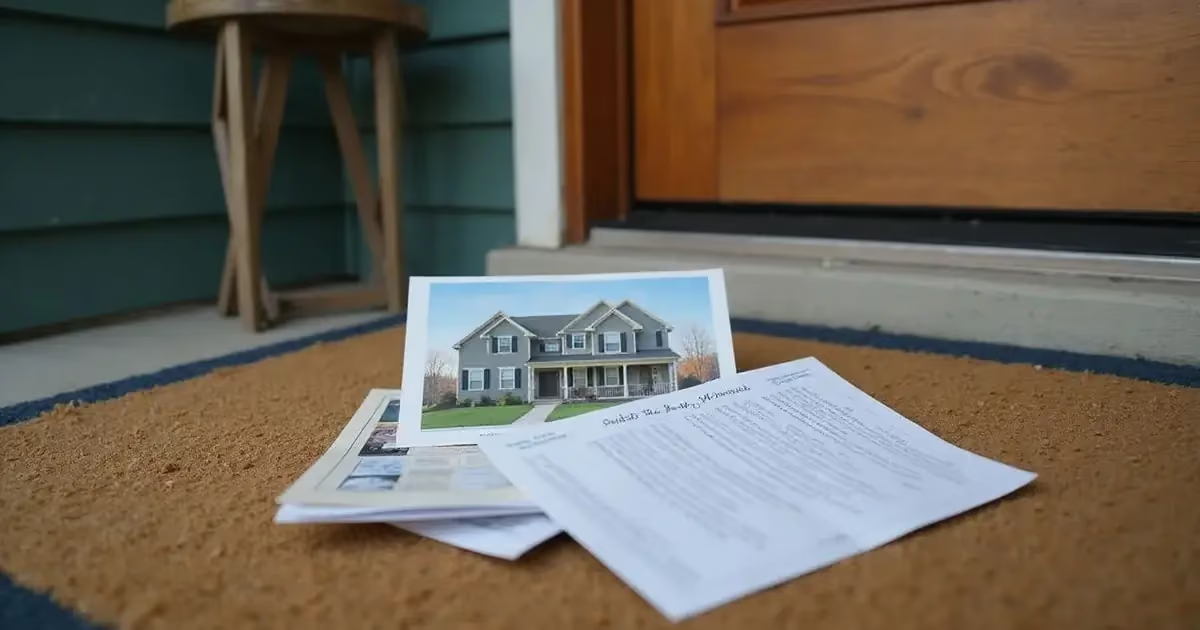
Why are owners in foreclosure targeted?
The foreclosure notice is public. Once a notice of sale is published, the letters start: “Stop your foreclosure now.” “We can save your home.”
Some are real options. Others are schemes built to take whatever equity you have left. Minnesota has a law aimed right at this: Minn. Stat. ch. 325N. Here’s how to tell the difference, and what your real foreclosure options look like.
Think you’re being scammed? Call the Minnesota Attorney General’s Office.
The common schemes
The paid “negotiator.” Someone promises to get your loan modified or the sale stopped if you pay a fee first. Then nothing happens, and the sale goes forward. Free help exists (more on that below), so you should never have to pay up front.
Sign the deed, rent it back. A buyer offers to “save” your house by having you sign the deed over. The pitch: you rent it back, then buy it back once your credit recovers. Then the rent turns out to be more than you can pay, the buyback terms are impossible, and your equity is gone.
The fake refinance. It looks like new loan paperwork, but you’re really signing over the deed.
The phantom help. Someone collects your payments and financial details, then sends nothing to your lender.
What Minnesota’s law does
Minn. Stat. ch. 325N covers two groups:
- Foreclosure consultants: people who offer, for a fee, to stop or delay a foreclosure or help you save your house. The statute calls them solicitors. They need a written contract with specific terms. You get three business days to cancel, and they can’t collect a fee until they’ve done everything they promised.
- Equity purchasers: buyers who take your deed during a foreclosure and promise you can rent it back or buy it back later. They need a written contract with set notices. You usually get five business days to cancel, and they can’t record the deed or resell the house until that time runs out. And they have to check that you can really afford the buyback.
If a consultant or buyer breaks these rules, you can sue for your damages and attorney fees and ask a court to undo the deal. Which rules apply depends on the paperwork. So if you’ve already signed something, talk to an attorney fast.
Red flags
| Red flag | Why it matters |
|---|---|
| Any upfront fee | Counseling is free, and consultants can’t charge before the work is done |
| “Sign the deed, we’ll handle it” | Signing over the deed outside a real closing can cost you everything |
| Promises you can rent it back or buy it back | A common way to strip your equity |
| Pressure to sign today | A real offer survives a day of thinking |
| Told not to talk to your lender or a lawyer | You should talk to both |
| No license, and they won’t meet you in person | Run the checks below |
How to check any buyer or helper

- License. Look them up with the Minnesota Department of Commerce.
- A face to face meeting. A real buyer comes out to the house and meets you there.
- Proof of funds. Ask any buyer for it.
- A real closing. At a Minnesota title company, with a settlement statement.
That’s the core of our Wholesaler Test. Run it on us, too.
How we handle buying from owners in foreclosure
We don’t charge you anything. And the only place we ask you to sign a deed is a real closing at a title company. Ryan lays out our offer and the other three paths plainly. That includes catching up the loan or refinancing if those fit better, and we make nothing on those.
Ryan tells you in writing that he’s a licensed Minnesota salesperson, license #40924708, with Coldwell Banker Realty. He's buying the house for us to make a profit, and he's not acting as your agent. If a deal ever includes renting the house back or buying it back, we follow the 325N contract, notice and cancellation rules.
Free help
The Minnesota Homeownership Center can put you in touch with a free foreclosure prevention advisor. Call them at 866-462-6466. You can call us at the same time. A good buyer won’t mind the second opinion.
This guide is general information, not legal, tax or financial advice. For your own situation, talk to a Minnesota attorney or tax professional.